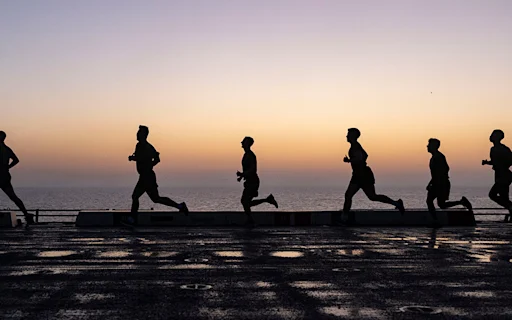



Humans are more important than hardware. This first principle of our U.S. Special Operations Forces centers people, not equipment, as the critical difference to mission success. For the world’s most elite operators and decision makers in SOF, operating at top physical and mental peak is not only a need; it’s a lifesaving mandate.
The battlefield of today is radically different than that of just a generation ago – it’s multi-domain, fast-paced and cognitively demanding. Human performance in this environment is critical to mission success and demands our collective focus and attention.
How we define “human performance” is no longer exclusive to physical conditioning. It also includes cognitive resilience, sleep optimization, stress inoculation, performance nutrition and recovery.
To highlight the importance of this work, the National Strength and Conditioning Association, the nation's leading authority in strength and conditioning, recently issued the Proposed Definition of Human Performance for the Department of War. Co‑authored by myself and a team of subject‑matter experts, the report not only defines human performance but offers practical, actionable guidance on how to integrate and apply it in existing and developing programs.
These are the top insights for mission readiness.
It’s About the Right People
It's true that any organization’s people are its driving force. It also stands to reason that “people” would be an important part of any human performance optimization strategy.
Having the right people in the right jobs with the right subject matter expertise makes all the difference. In a human performance context, that includes a top team of strength and conditioning professionals, dieticians, operational psychologists, cognitive performance specialists, chaplains, athletic trainers, physical and occupational therapists and a director of human performance. Together, this team can optimize performance across every conceivable metric.
Clearly Defined Functions and Roles are Essential
With a range of knowledge and expertise all working together, it is incredibly important to have clearly defined functions and roles across the team. This provides clarity on ownership and expectations and helps to reduce friction and ambiguity in day-to-day operations. This also helps a team define its purpose and scope, and to see itself as part of a larger team of professionals working toward the same mission.
Team Location Drives Effectiveness
The report highlights the importance of co-located teams that can contribute to increased collaboration, a sense of purpose and enhanced morale. We have seen this within the Department of War through Human Performance Training Centers, where teams work side-by-side to provide warfighters all the components of human performance optimization in one place.
Communication is Key
Daily communication across realms of human performance is a best practice. This helps provide continuity of care for the warfighter and ensures a bi-directional flow of information between the warfighter and the care team. This also further ensures that leadership and staff are on the same page about key priorities and activities for the day ahead.
Articulate Both Policies and Workflows
Policies outline actions, and actions are solidified by policy. Having both a policy in place and a mapping of the proper workflow to adhere to that policy takes the guesswork out of the day-to-day. It sets parameters for decision-making derived from organizational capacity, ensuring consistency across teams.
Without a doubt, today’s definition of human performance and how to optimize it across teams will be different than tomorrow’s. This is why careful, methodical attention to defining the discipline, operationalizing it at scale and integrating it into practice is crucial.