
Q&A with GDIT Technical and Security Experts Jerry Kessler and Shawn Milligan
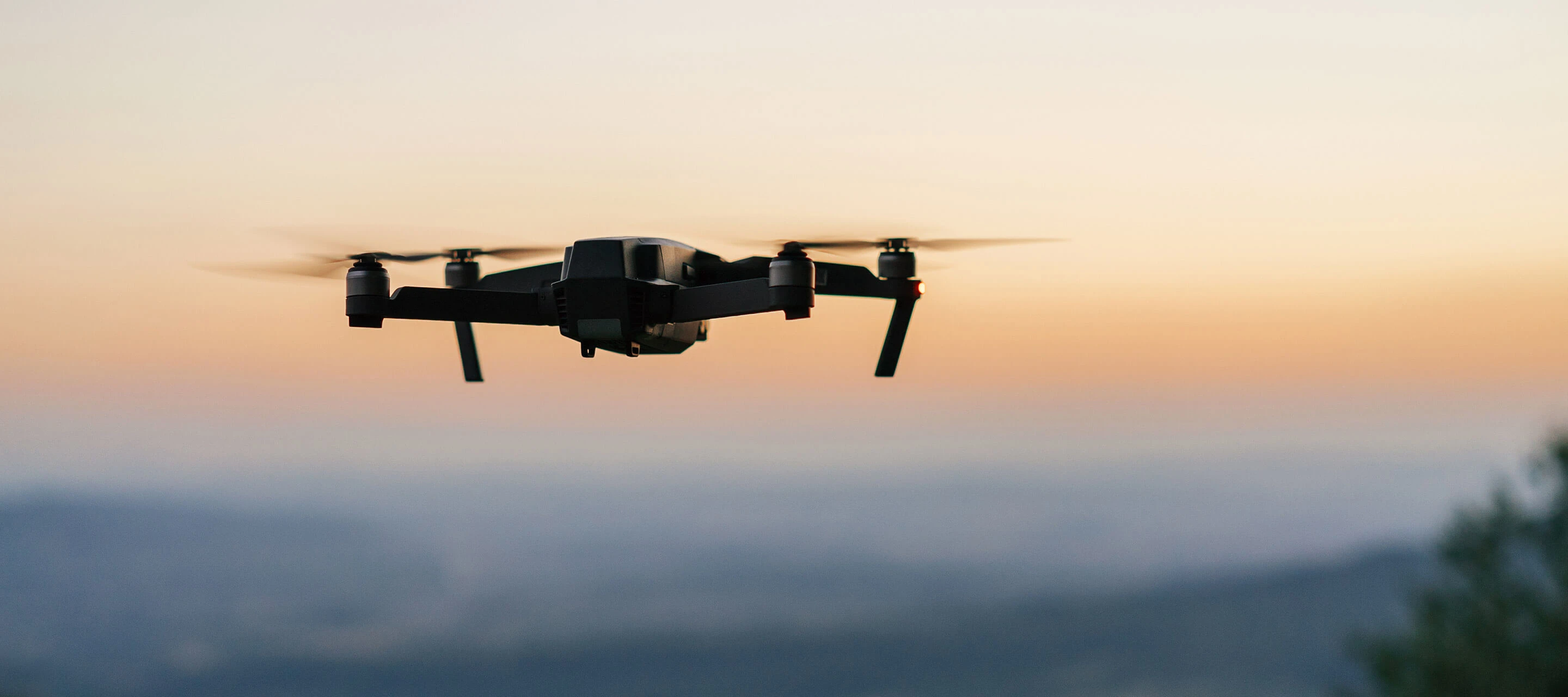
Along our nation’s southern border, unmanned aircraft systems (UAS), often called drones, are increasingly used by criminal organizations, drug traffickers and smugglers to monitor U.S. law enforcement and border patrol activity. This method of surveillance enables these groups to evade detection and continue illicit operations, making counter-UAS capabilities a critical national security priority.
Today, GDIT works with agencies within the national security community to detect, identify and track drone activity at the border. Our teams bring vast experience from securing embassies abroad, where drone threats have long been a concern, to bring a unique perspective and strengthen protection efforts domestically.
Against this backdrop, we spoke with two GDIT experts: Jerry Kessler and Shawn Milligan, who have each supported the Department of State for 20+ years, providing technical and security expertise.
Q: Shawn, can you tell us what GDIT teams are doing to counter drone activity at the Southern Border?
At a high level, we marry expertise in real-time data collection and analysis, edge processing capabilities, AI-driven image analysis, and radio frequency signature technology. These capabilities come together in solutions like a mobile counter-UAS vehicle that can disrupt frequencies from UAS devices and prevent them from doing harm.
We also have the Defense Operations Grid Mesh Accelerator, or DOGMA. It’s an AI solution that can be deployed anywhere. You can deploy it from a single laptop to a device in low-earth orbit, and it rapidly streamlines data processing, analysis and decision-making. Both of these solutions directly support the mission of securing the border.
Q: Jerry, how does our work abroad inform the work we’re doing here at home?
GDIT and their partners do a lot of work securing U.S. embassies overseas, especially in places that are strategically sensitive. In past conflicts, for example, drone surveillance was a persistent threat at our overseas facilities. This required us to implement an integrated system-of-systems capable of detecting, identifying and tracking these threats in real time.
Much of the counter-UAS knowledge we are deploying with partners today at the border came from this experience. We are using many of the same tools, techniques and procedures that have kept our embassies safe, now adapted to keep our borders safe as well.
Q: Shawn, can you walk us through what happens when we see something potentially nefarious?
Monitoring and tracking drone activity, identifying bad actors and warning stakeholders is essential, but it’s only one part of the equation. When action is required to mitigate a drone threat, multiple teams and agencies are involved.
When a watch stander detects an unidentified aerial contact, they report the observation to the relevant operations center and help identify the contact. Once it’s confirmed the contact is a drone, we coordinate with the Department of War and local agencies operating in the area to determine whether additional systems have correlated data. After visual or sensor confirmation, the operations center maintains continuous monitoring and evaluates whether mitigation is necessary.
If mitigation is necessary, authorized counter drone measures are executed to neutralize or disable the threat. An After Action Report (AAR) then conveys to senior leadership the detection and identification processes, the operational response and the final disposition of the drone.
Our role is to rapidly share information, coordinate with partners and ensure decision-makers have exactly what they need with integrated, reliable solutions.
Q: Jerry, what are you seeing across the mission that underscores the need for those integrated solutions Shawn mentioned?
Having mission partners who bring together operational experience, technology, mission knowledge and strong coordination with other agencies or state and local entities is important.
Right now, from a policy perspective, as the U.S. is developing and evolving its counter-UAS frameworks, GDIT’s footprint and experience at home and abroad positions us uniquely well. That depth of expertise and collaboration is why we’re trusted with a significant portion of counter-UAS operations at the border.