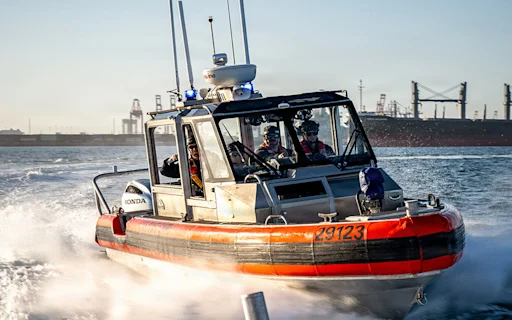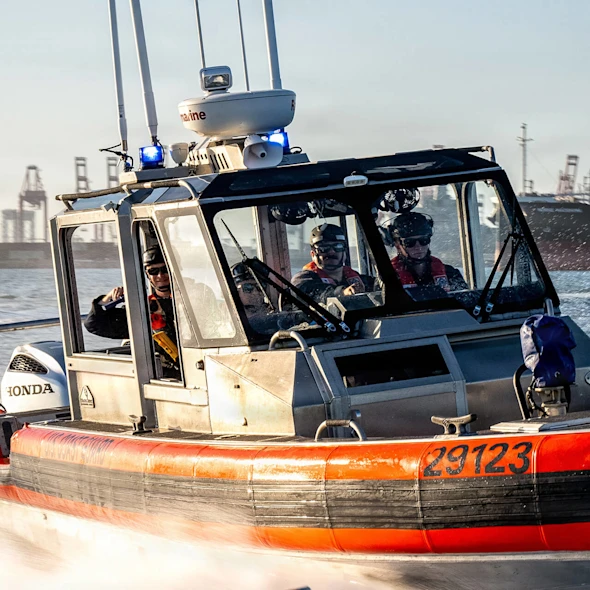

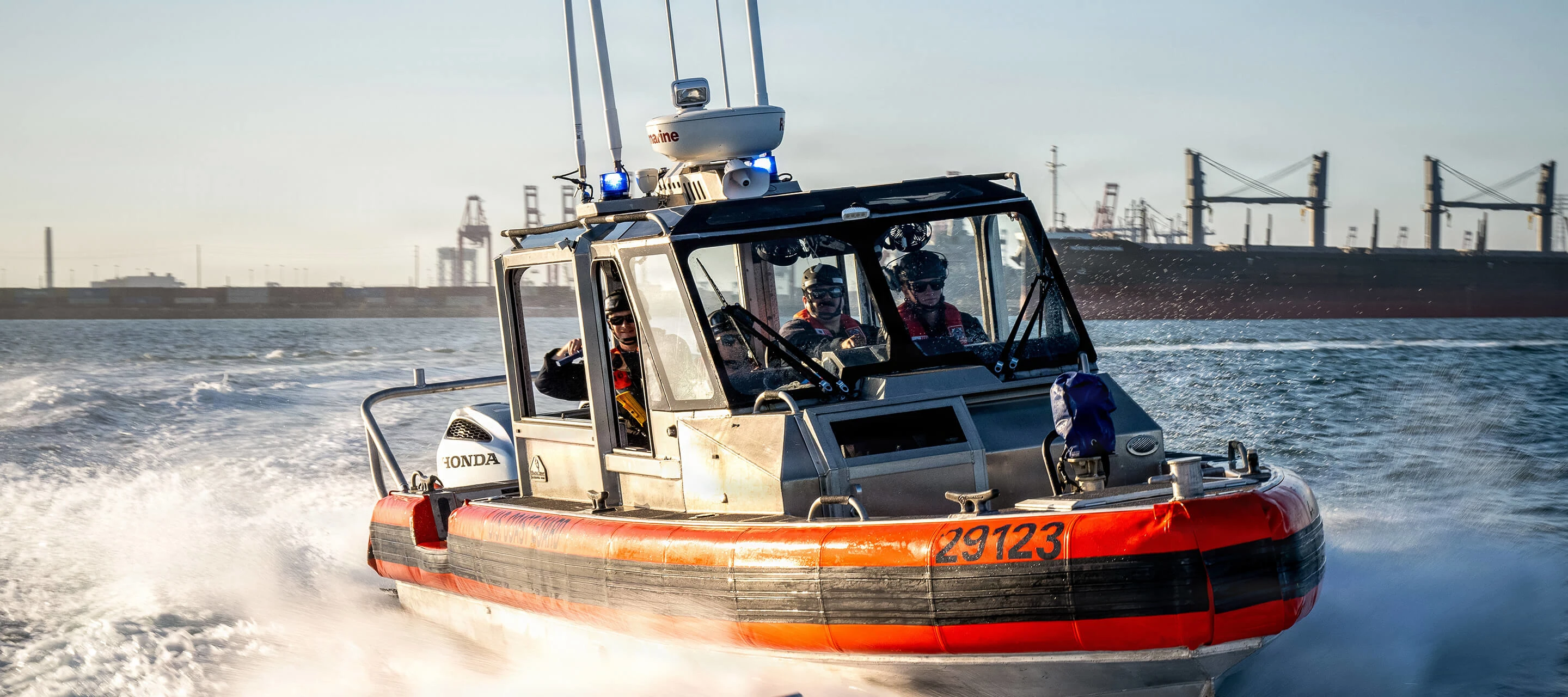

The United States Coast Guard (USCG) is unique among government maritime agencies in that it is an official branch of the U.S. Armed Forces and a component of the Department of Homeland Security (DHS). It holds both law enforcement authority, unlike its Department of War partners, and regulatory powers, unlike the purely civilian search-and-rescue agencies, regional police or local volunteer organizations of other nations.
The USCG has 11 distinct missions spanning deep-water drug and migrant interdiction, commercial vessel safety inspections, polar icebreaking, fishery enforcement and port security operations across domestic and international waters. These essential and often lifesaving missions demand exceptional awareness and monitoring capabilities extending from America’s coastlines miles into the open ocean.
Enhancing Sensors, Systems and Analysis Capabilities
Force Design 2028 is the USCG’s multi-year modernization and recapitalization strategy. Beyond workforce and shore infrastructure, the agency is working to modernize its surveillance, communications and command and control capabilities. The goal is to update key systems and provide modern tools that enable USCG personnel to increase effectiveness, while uniting siloed and aged systems. Ultimately, the agency aims to collapse decision cycles, integrate edge sensors and leverage emerging technology to fuse real-time data and take decisive action on it to advance its mission.
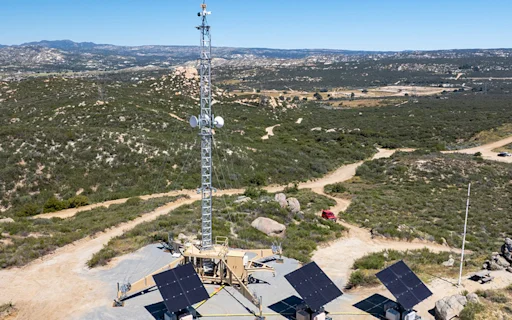
The Coast Guard’s network of communication towers is an enabler that will be leveraged to support the Force Design 2028 initiatives because of the integral role it plays in providing the agency with broad maritime awareness. Updating them and modernizing the tower-based sensors to create a common architecture framework will deliver a much more complete data picture to USCG users and analysts.
Our team members have years of experience building and supporting towers and tower-based technology for multiple DHS agencies, both as mission partners and as former DHS personnel. This level of experience and expertise has positioned us well to support the agency in updating tower technology for a 2026 and beyond operational context.
Applying Learnings from Southern Border Tower Technology
At the U.S. southern border, where situational awareness, data analysis and a common operating picture are also essential, GDIT teams have built and deployed tower technology that is expanding capacity and saving lives. The solution set of cameras, sensors, data mesh technology, automation and integration enhances and accelerates the mission. A data fabric enables ingestion and analysis alongside AI-enabled integration and automation.
This commercial off-the-shelf (COTS) tower technology solution makes every operator and analyst at the southern border more effective, saving time and money. To create it, we brought together best-of-breed technology from across our network of commercial suppliers and partners. We combined that with our mission knowledge, the technical expertise of our teams and a history of mission-moving operational capacity.
Combining COTS Technology and Mission Understanding
Just as at the U.S. southern border, we bring a technological capacity and ability to integrate commercial technologies to enhance operations for any customer. Specific to the USCG, using our domain and technology expertise, along with our familiarity with current USCG systems and the USCG mission, we are working quickly to meet the challenges set forth in Force Design 2028.
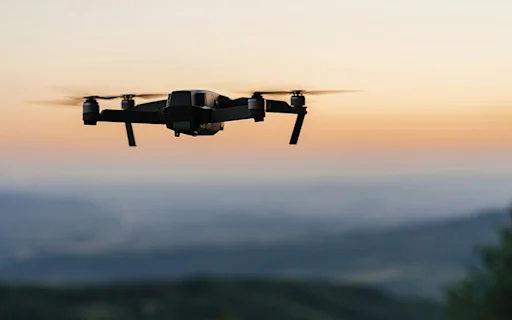
As such, new commercial sensors are being integrated into a shared data fabric, giving the Coast Guard a faster path from data to decision. We enable teams to use AI and other tools to collect, augment and interpret data. By bringing focus to what matters most and pinpointing trends and areas of opportunity, we reduce analytic strain and increase watch stander effectiveness. As a true mission partner, we are saving time, money and resources, protecting lives and supporting the Coast Guard to meet its important mission.